Unmasking the Mystery: Why Your Website Displays Weird Characters
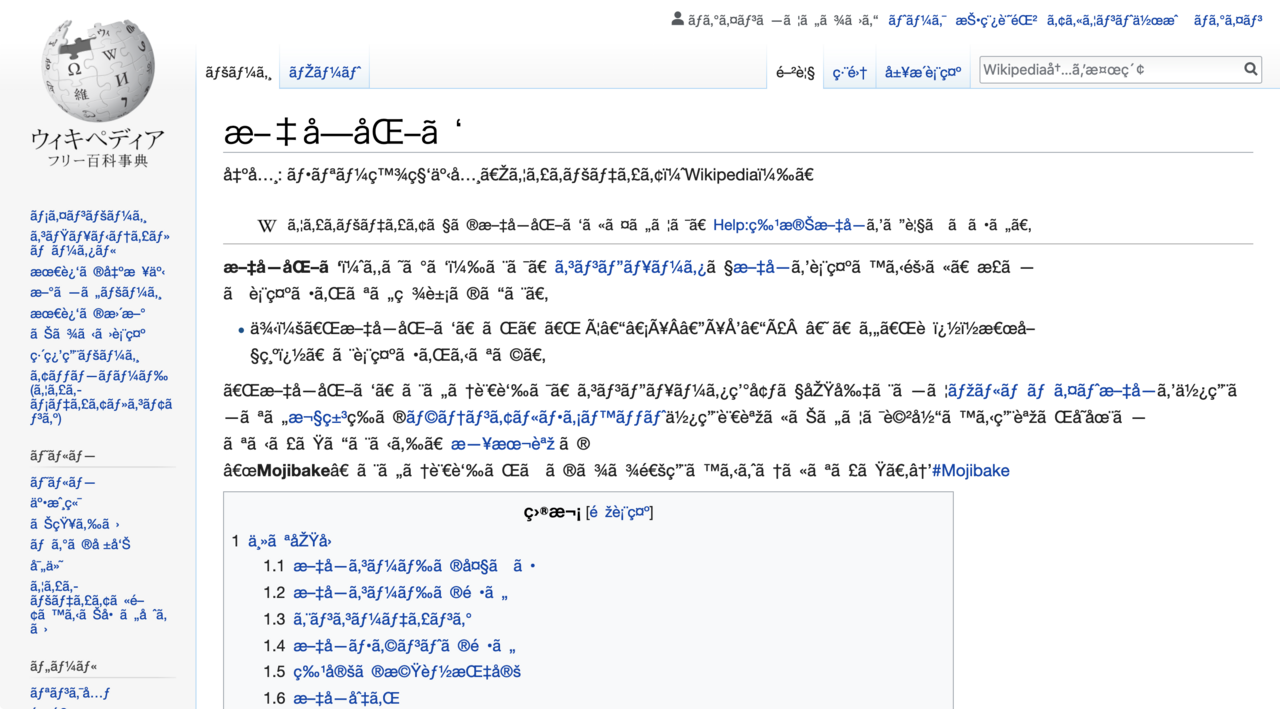
Have you ever visited a webpage only to be greeted by a confusing array of symbols like 'â', 'Â', '’', or even seemingly random sequences such as 'ë, Ã, ì, ù', and 'â‚ ¬'? This visual glitch isn't just an aesthetic annoyance; it's a clear indicator of a deeper, more fundamental issue: character encoding mismatch. Whether you're a seasoned developer or just starting out, encountering these "mojibake" characters can be incredibly frustrating. The good news is, for most PHP and MySQL applications, the solution often lies in the consistent and correct implementation of UTF-8. This phenomenon isn't limited to specific characters or languages; it affects anything from smart punctuation marks to complex, non-Latin scripts. For instance, correctly rendering intricate text like 'ゆ㠆㠆 çª“å £ ç ¾é‡‘ 書留' (which translates roughly to "Yuyu window cash document" in Japanese) relies entirely on your system understanding the character set. Without UTF-8, such phrases become a jumble of unrecognizable symbols. Let's delve into why these characters appear and, more importantly, how to banish them from your web applications forever.Understanding the UTF-8 Conundrum: Why Weird Characters Appear
At its core, the problem of weird characters stems from a lack of agreement on how text data should be interpreted. Imagine two people speaking, one in English and the other expecting French; miscommunication is inevitable. In web development, this often happens when your database, your PHP script, and your web browser are all operating under different assumptions about character encoding. UTF-8 (Unicode Transformation Format - 8-bit) is a variable-width character encoding that can represent every character in the Unicode character set. Unlike older encodings like ASCII or ISO-8859-1 (Latin-1), which use a single byte per character, UTF-8 uses one to four bytes per character. For characters found in the standard ASCII set (0-127), UTF-8 uses a single byte, making it backward compatible with ASCII. This efficiency makes UTF-8 ideal for multilingual web applications, as it can gracefully handle anything from English letters to complex Chinese characters or Japanese script like the "ゆ㠆㠆 çª“å £ ç ¾é‡‘ 書留" example. The "weird characters" manifest when a sequence of bytes, intended to be a multi-byte UTF-8 character, is incorrectly interpreted by a system expecting a single-byte encoding like ISO-8859-1. For instance, a UTF-8 encoded em dash (—) might be represented by three bytes. If interpreted as Latin-1, those three bytes will become three separate, often strange-looking, characters like '—'. Similarly, the smart quotes (“ ”) or apostrophes (’) that word processors like Microsoft Word often introduce are common culprits when they’re pasted into forms and not handled correctly. Historically, PHP's native string handling functions (e.g., `strlen()`, `substr()`) were not natively UTF-8 aware. They operate on bytes, not characters. This means `strlen()` would count the bytes in a multi-byte UTF-8 string, potentially giving an incorrect character count. While modern PHP (especially with the `mbstring` extension, which is typically enabled by default) and frameworks are much better equipped, older applications or those not explicitly configured for UTF-8 can still struggle. The key takeaway is consistency: every component in your application's data flow must be configured to speak UTF-8. For a deeper dive into the root causes of these encoding headaches, we recommend reading Decoding Strange Text: The Root Causes of Character Set Problems.The Essential Checklist for UTF-8 Harmony in PHP & MySQL
Achieving perfect UTF-8 rendering requires a synchronized effort across your entire stack. Here’s a comprehensive checklist to ensure your PHP and MySQL applications are speaking the same language:-
Configure Your MySQL Connection
This is arguably the most crucial step. As soon as your PHP script connects to MySQL, you must tell the database connection to use UTF-8. For older
mysql_*functions (which are deprecated, but still found in legacy code):mysql_query("SET NAMES 'utf8'");If you're using MySQLi (the improved MySQL extension):
$mysqli_conn->set_charset("utf8");Or with PDO (PHP Data Objects), specify it in the DSN (Data Source Name):
$pdo_conn = new PDO('mysql:host=localhost;dbname=your_db;charset=utf8', $username, $password);Pro Tip: Using
utf8mb4instead of justutf8is highly recommended, especially if you need to support a wider range of Unicode characters, including emojis and certain complex scripts. MySQL'sutf8encoding actually only supports a subset of UTF-8 (up to 3 bytes), whileutf8mb4supports the full 4-byte range. -
Send the Correct PHP Header
Before any content is sent to the browser, your PHP script needs to declare its character set. This tells the browser how to interpret the incoming HTML. This header must be sent *before* any output (even whitespace):
header("Content-type: text/html; charset=utf-8");If you're dealing with JSON responses, adapt accordingly:
header('Content-Type: application/json; charset=utf-8'); -
Include the HTML Meta Tag
As a safety net and for better browser compatibility, include a meta tag in your HTML's
<head>section. For modern HTML5, this is simplified:<meta charset="utf-8">For older HTML standards or maximum compatibility:
<meta http-equiv="Content-Type" content="text/html; charset=utf-8" />This provides an additional hint to the browser, though the HTTP header takes precedence.
-
Mind Your String Handling Functions
Avoid using `addslashes()` for escaping data destined for MySQL; it's byte-oriented and unsafe. Always use `mysql_real_escape_string()` (deprecated) or, better yet, prepared statements with MySQLi or PDO. Prepared statements automatically handle escaping and character sets, significantly reducing the risk of both weird characters and SQL injection vulnerabilities.
For operations like calculating string length or substring manipulation in PHP, use the multi-byte string functions provided by the `mbstring` extension (e.g., `mb_strlen()`, `mb_substr()`, `mb_strtoupper()`). These functions understand characters, not just bytes, and are crucial for correctly handling multi-byte UTF-8 strings.
-
Ensure File Encoding is UTF-8
Make sure your PHP files themselves are saved with UTF-8 encoding (without a Byte Order Mark, or BOM). Most modern text editors and IDEs (like VS Code, Sublime Text, PHPStorm) allow you to specify the file encoding. A BOM can sometimes cause issues, especially with PHP headers, as it's interpreted as output.
-
Set MySQL Database, Table, and Column Collations
Finally, ensure your MySQL database, specific tables, and even individual text columns are configured to use a UTF-8 collation. The recommended collation is `utf8mb4_unicode_ci` (or `utf8mb4_general_ci`). The `_ci` suffix means "case-insensitive," which is generally desired for text fields.
ALTER DATABASE your_db_name CHARACTER SET utf8mb4 COLLATE utf8mb4_unicode_ci;ALTER TABLE your_table_name CONVERT TO CHARACTER SET utf8mb4 COLLATE utf8mb4_unicode_ci;If you're creating new tables, specify `CHARACTER SET utf8mb4 COLLATE utf8mb4_unicode_ci` in your
CREATE TABLEstatements.
For an even more detailed walkthrough on setting up your environment, check out Essential UTF-8 Setup for PHP & MySQL: Eliminate Bad Characters.
Advanced Tips and Troubleshooting
Even with the above steps, you might still encounter stubborn character issues, especially with existing data or complex user inputs.- User-Generated Content and "Smart Quotes": Users often paste text from word processors like Microsoft Word, which automatically converts straight quotes ("") and hyphens (-) into "smart quotes" (“”) and en/em dashes (–—). If your encoding chain isn't robust, these special characters are prime candidates for becoming mojibake. Ensure your input sanitization process, if any, is UTF-8 aware.
- Converting Existing Corrupted Data: If your database already contains garbled data due to incorrect past encodings, simply changing the table's character set might not fix it. It might require a multi-step process, potentially dumping the data, re-encoding it, and then importing it into a properly configured database. Be extremely cautious and always back up your database before attempting such operations. A common mistake is attempting to convert data that is already double-encoded (e.g., UTF-8 data stored in a Latin-1 column, then read as Latin-1 and converted *again*).
- Debugging the Encoding Chain: To pinpoint where the problem lies, use your browser's developer tools to inspect the HTTP headers and confirm the `Content-Type` header is indeed `charset=utf-8`. You can also inspect raw data directly from your PHP script (e.g., `var_dump($string)`) and your database to see how characters are stored at each stage.
- Leveraging Modern PHP and Frameworks: Contemporary PHP versions and popular frameworks (like Laravel, Symfony) often handle much of this UTF-8 configuration boilerplate for you, especially with their database abstraction layers and templating engines. Staying updated with the latest PHP versions and using well-maintained frameworks can significantly ease UTF-8 management.